
JOHN LEWIS - "ACTIVITY PLANNER" PROJECT
UX Designer - UI Designer
Working with Business Analysts and stakeholders at John Lewis head office, I led UX and UI design for a tablet and desktop web application. The platform enabled branches to plan and manage local events while maintaining visibility of centrally coordinated activity from head office, ensuring alignment between local execution and global strategy.
For this project I used:
Adobe XD
Adobe Illustrator
Adobe Photoshop
Balsamiq
Azure



Atom
HTML
CSS
Javascript
jQuery
NodeJS
USER JOURNEY
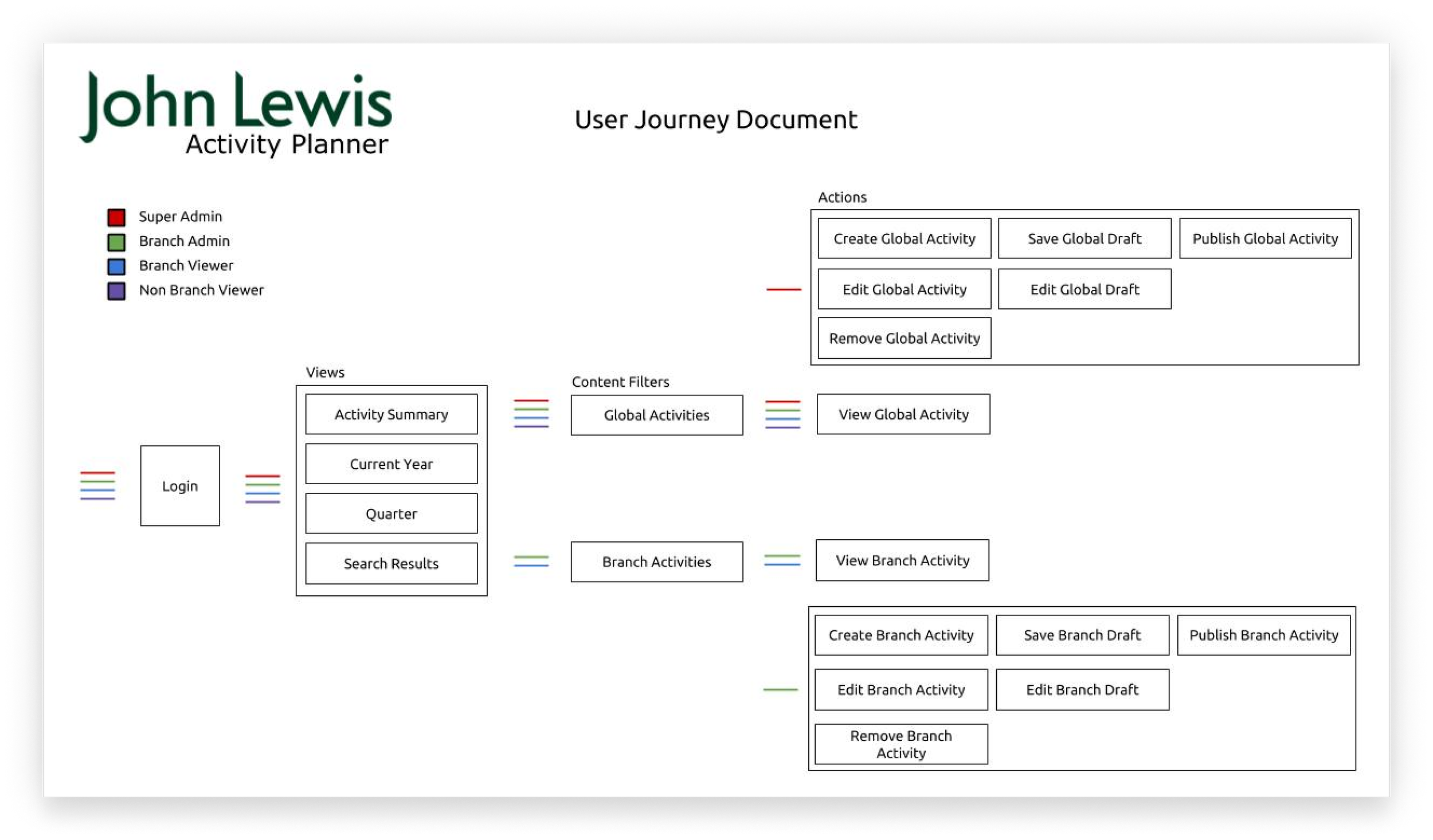
The Activity Planner supported four distinct user groups, each with defined permissions for viewing and editing events.
To ensure clarity and alignment, I created a detailed user journey framework outlining the actions, access levels, and interaction paths for each group, providing a clear reference for both design and development.
SKETCHES
During requirements discussions with stakeholders and Business Analysts, I used rapid sketching to visualise ideas in real time. This enabled quick alignment on functionality and overall direction, ensuring a shared understanding before moving into more detailed design stages.
INTERACTIVE STYLE GUIDE
After aligning with developers on the tech stack, I built an interactive style guide using HTML, CSS, and JavaScript. This provided a practical reference for implementation, allowing developers to explore components in context and reuse production-ready code snippets directly within their workflows.