TELEFÓNICA
"ONE" MULTI-BRAND DESIGN SYSTEM
UX Designer
Documentation UX Writer
UI Designer
As part of the Design System team from inception at Telefónica, we conducted a comprehensive audit across 10 brands, analysing digital products at a component level to identify shared patterns and critical differences.
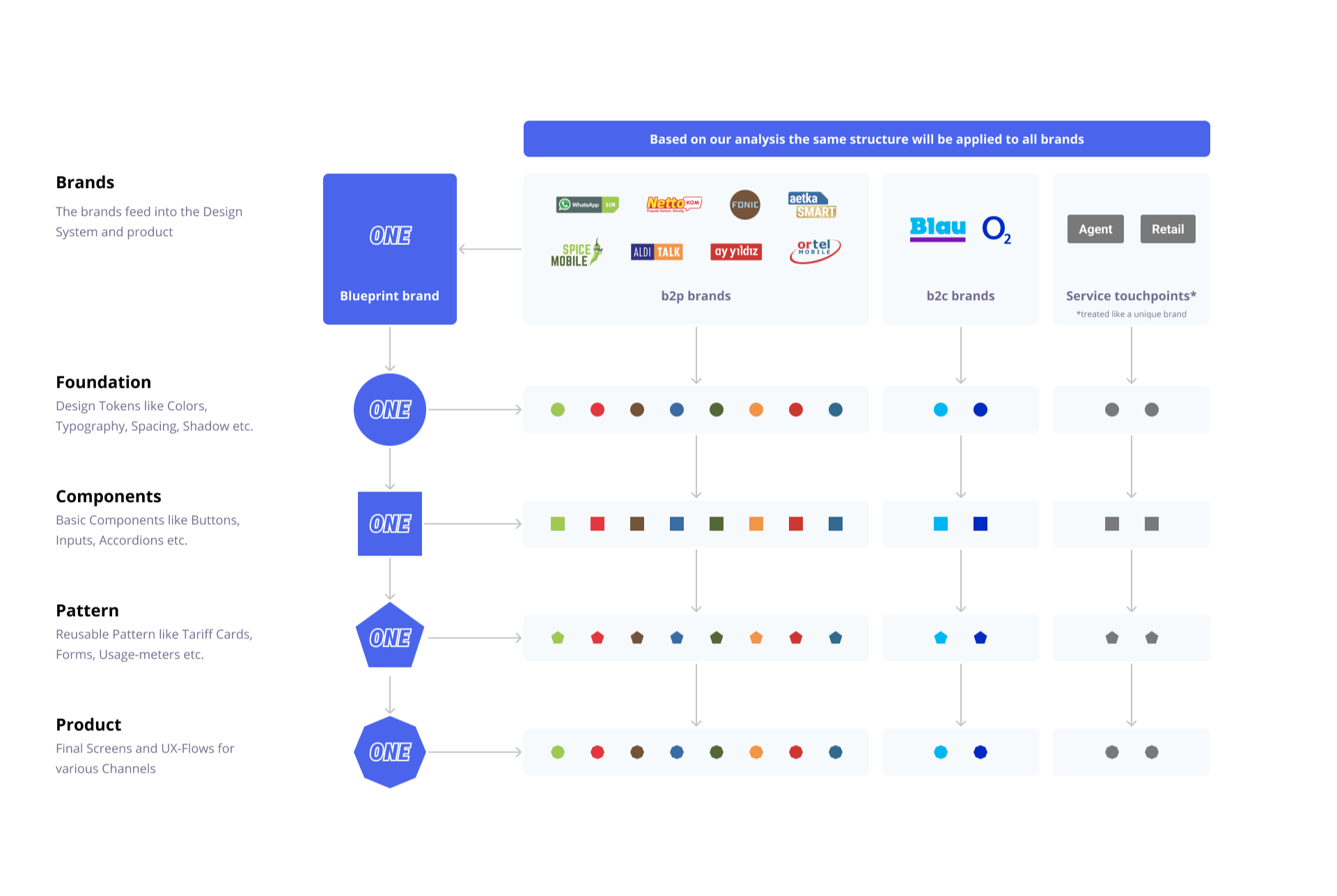
This insight informed the creation of a single, scalable core component library, designed as the foundation for all brand implementations. From this base, we developed individual branded libraries, enabling product teams to work consistently while maintaining their unique visual identity.
The process was highly collaborative, spanning a distributed team working across multiple markets and brand ecosystems. Together, we delivered 30+ core components, 10 branded libraries, and a fully documented Design System, providing clear guidance, governance, and a scalable framework for ongoing product development.
For this project I used:
Figma
Zeroheight

CHALLENGE
Telefónica operates multiple mobile brands across different markets, each with its own visual language and identity. As these brands were brought under a single organisation, there was a need to unify the experience without losing brand individuality.
The objective was to establish a shared Design System core that enabled designers across the business to collaborate, standardise patterns, and share best practices. This ensured a consistent, seamless user experience, particularly at transition points between brand-specific products and Telefónica owned platforms, while still allowing each brand to retain its distinct identity.
SOLUTION
By establishing a shared core component library, each brand retained its distinct visual identity while benefiting from consistent, reusable patterns and user journeys. This enabled designers to collaborate more effectively, align on best practices, and deliver a more cohesive experience across the ecosystem.
From a development perspective, shared functionality only needed to be built once. Brand-specific styling could then be applied on top of a common foundation, significantly reducing duplication of effort. This approach improved efficiency, reduced costs, and allowed engineering teams to focus on delivering new features and modernising legacy systems rather than rebuilding the same interfaces across multiple brands.
OUTCOME
The unified design system established a shared foundation across 10 Telefónica sub-brands, enabling ~10 product teams to design and deliver against a consistent set of components, patterns, and accessibility standards. This shifted teams from rebuilding UI to assembling validated solutions, materially improving both speed and quality.
At a team level, designers saved approximately 1–2 days per month each, by eliminating repeated component creation, reducing rework, and accelerating decision-making. Scaled across ~20 designers, this equates to 240–480 design days saved annually (≈ 1–2 FTE designers).
Beyond direct design efficiency, the system delivered additional compounding gains:
Faster onboarding: New designers could contribute meaningfully in days rather than weeks due to a well-defined component and pattern library
Reduced cross-brand inconsistency: A single source of truth ensured visual and interaction parity across all sub-brands
Fewer QA cycles: Pre-validated components reduced back-and-forth between design and engineering
Improved development efficiency: Shared components and predictable patterns reduced implementation time and frontend divergence
Embedded accessibility: Reusable, compliant components raised the baseline quality across all products without requiring repeated audits
When factoring in design and engineering efficiencies combined, the system contributed to an estimated 2–4 FTE equivalent in overall product delivery capacity.
Faster delivery, higher quality, and a scalable multi-brand ecosystem capable of supporting Telefónica’s product growth without proportional increases in team size.
ANALYSIS
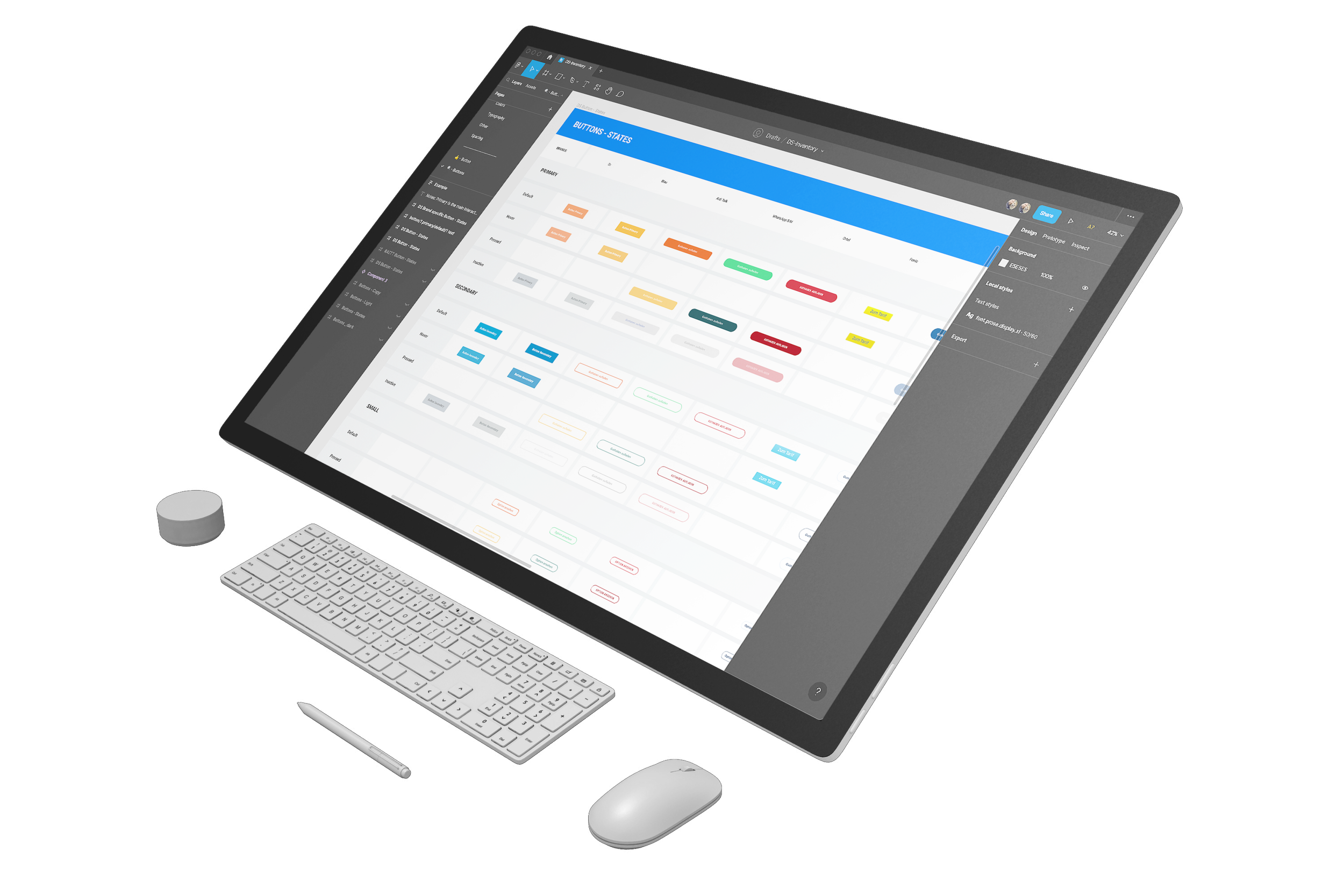
By mapping component matrices across products, we visualised the full landscape and identified patterns, overlaps, and inconsistencies. This enabled informed decisions when defining a unified core component library, establishing a scalable foundation from which all branded libraries could be built.
INTERNAL UX
As the Design System team, we established the foundations for scale - defining file structures, naming conventions, and ways of working to ensure consistency and efficient collaboration across teams.
We developed and delivered presentations to drive adoption, clearly communicating components, patterns, and workflows. In parallel, we built a multi-library, multi-brand system architecture, enabling a shared core of components to be reused across established brands while supporting their individual identities.
ONE DESIGN SYSTEM TO RULE THEM ALL
Core components were developed within the central Design System and propagated to brand libraries, with theming applied to preserve each brand’s visual identity during updates.
Brand-specific libraries were extended with tailored components, enabling individual teams to manage their own needs while remaining aligned to the shared foundation.
Adoption was driven through Design System workshops and regular cross-team sessions, encouraging collaboration, reinforcing cohesion, and helping teams determine when components should remain brand-specific or be elevated into the core library.